The Truth Behind the Paperwork: Mastering the TDS in California Transactions
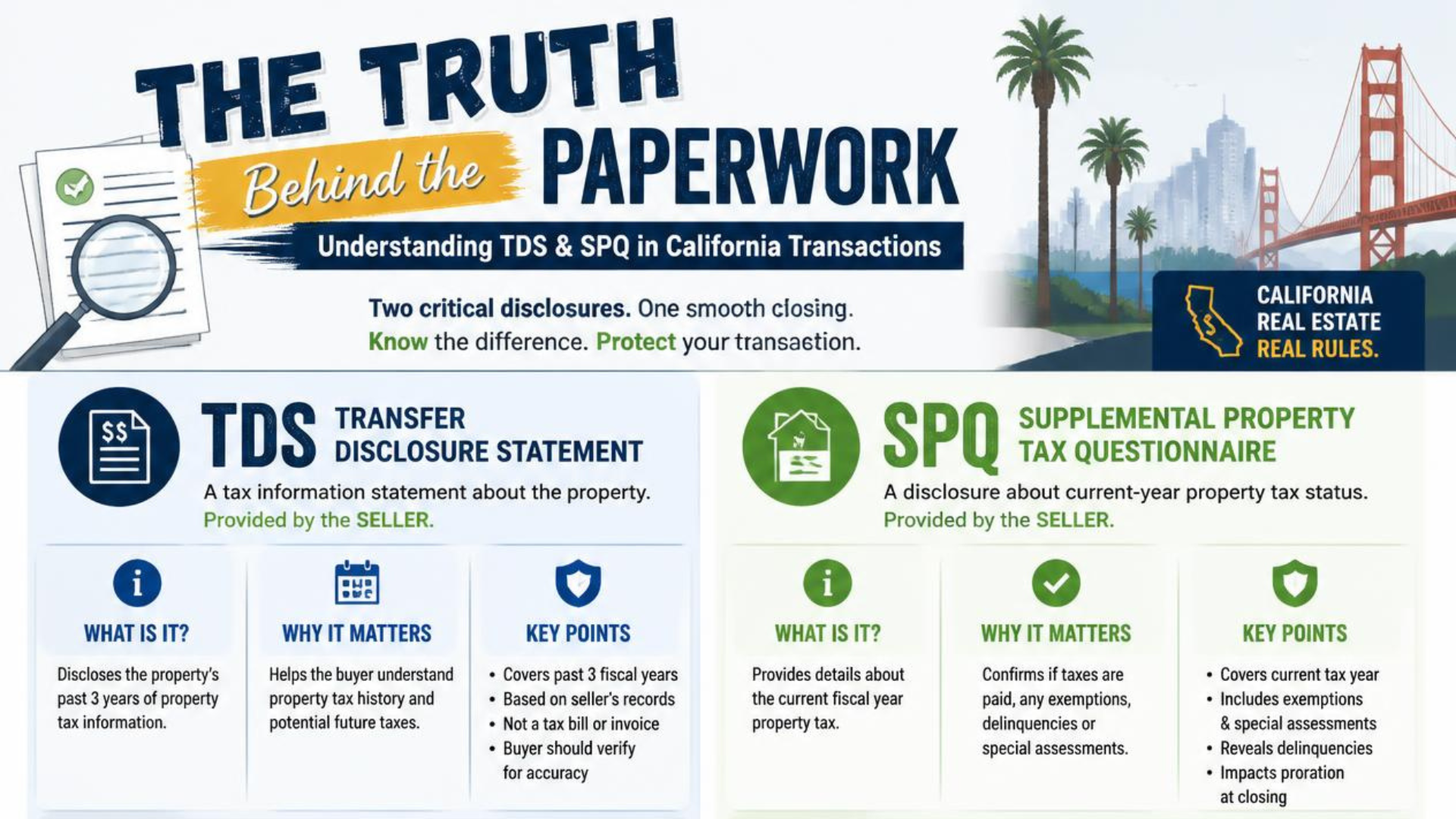
In California, selling a home involves a lot of paperwork, but none are more important than your disclosure forms. The law requires sellers of residential properties to be completely transparent. You must disclose all known material facts, which simply means any detail about the home's condition that could affect a buyer's decision to buy it or how much they are willing to pay.
In high-value Silicon Valley neighborhoods like Santa Clara, Los Altos, and Cambrian, preparing these forms early and accurately is your best legal and financial shield.
Here is a simplified, worry-free guide to mastering your seller disclosures.
1. Honest Disclosures Are Not Waivable
A common myth is that selling a home "as-is" means you do not have to disclose problems. In California, "as-is" only means you will not pay for repairs; it does not excuse you from telling the truth. You are legally required to disclose all known defects, unpermitted work, and neighborhood issues.
2. You Must Fill Them Out by Hand
The primary disclosure form is the state-mandated Transfer Disclosure Statement (TDS). By law, this form must be filled out in your own handwriting. Your real estate agent can explain the questions to you, but they are strictly prohibited from writing the answers for you. This ensures that the answers come directly from your personal knowledge of living in the home.
3. CAR SPQ vs. PRDS SSC: Which Form Do You Need?
Depending on where your home is located in Silicon Valley, you will use different supplemental questionnaires to accompany the TDS:
- PRDS Supplemental Seller's Checklist (SSC): Commonly used on the Peninsula and in areas like Los Gatos and Saratoga. It is highly detailed and walks you category by category to help you remember your home's history.
- CAR Seller Property Questionnaire (SPQ): Used in most other parts of California.
Using the right contract and disclosure forms matches local buyer expectations and keeps your transaction running smoothly.
4. Gather Your Historical "House Files"
Both supplemental forms require you to disclose and provide any historical documents in your possession. This includes past home inspections, roof warranties, architectural plans, and major repair receipts. Finding and organizing these files early builds immense buyer trust and prevents delays during escrow.
5. The "Past Repairs" Rule
Many sellers ask: "If I had a roof leak five years ago but had it professionally repaired, do I still need to disclose it?" Yes. You must disclose past issues even if they have been successfully fixed. Buyers have a legal right to know the structural history of the home so they can inspect those areas more closely.
6. The Three-Year Death Rule
Under California law, you must disclose if an occupant passed away anywhere on the property (including the yard) within the past three years. If a passing occurred more than three years ago, you do not have to proactively disclose it unless a buyer asks you a direct question about it. Note that AIDS-related deaths are legally protected and must never be disclosed.
7. The High Cost of Cutting Corners
Failing to disclose known issues can derail your sale. If you deliver your disclosure forms late or make major changes after accepting an offer, the buyer receives an automatic 3-day or 5-day right to cancel the contract and walk away with their deposit. Worse, hiding known defects leaves you open to expensive, post-sale lawsuits for fraud and repair costs years after the sale is finalized.